
EXECUTIVE COACHING & LEADERSHIP DEVELOPMENT
Stronger communication. Greater accountability. Better leadership.
The manager you promoted knows the job but avoids the hard conversations. The director you depend on works constantly and yet the team still waits for every decision. The executive you hired understands the strategy but struggles to bring others with them.
When leadership stalls, the effects reach beyond one person. Missed expectations, unresolved conflict and poor follow-through can affect the entire organization. Another seminar alone may not address what happens when the leader returns to work.
I work with organizations to develop managers, directors and executives through one-to-one executive coaching paired with practical leadership development. The work is built around real challenges, measurable commitments and what the leader does between conversations.
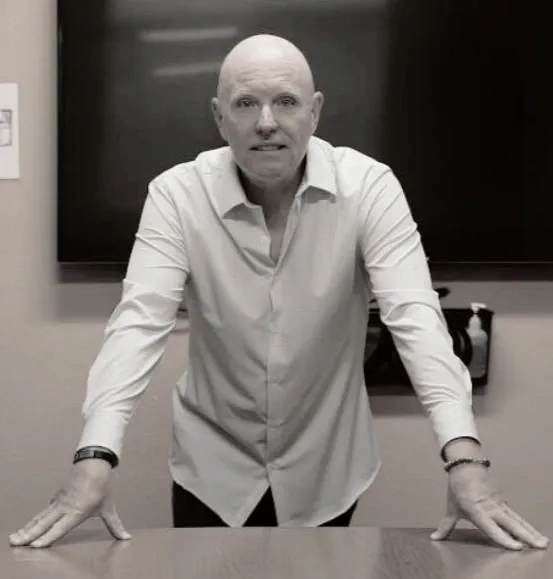
LEADERSHIP DEVELOPMENT FOR ORGANIZATIONS
You’re investing in people who make important decisions and influence how others work. They need more than information. They need a disciplined place to examine the situation, practice new behavior and account for their follow-through.
Company-sponsored executive coaching is designed for organizations developing high-potential leaders, supporting newly promoted managers, strengthening executive communication and addressing difficult people-leadership challenges.
WHAT PROBLEMS CAN EXECUTIVE COACHING ADDRESS?
• Difficult conversations and workplace conflict: address issues before they become bigger problems.
• Executive communication and presence: be clear, credible and effective across roles and personalities.
• Accountability and performance: set expectations, follow through and hold the line without demeaning people.
• Delegation and team development: stop becoming the bottleneck for every decision.
• Leadership transitions: step into a new role, lead former peers or manage greater responsibility.
• Decisions under pressure: balance competing needs, values and consequences.
THREE WAYS TO WORK TOGETHER
THREE – MONTH EXECUTIVE COACHING & LEADERSHIP DEVELOPMENT
Six individual sessions over three months. Best for a specific leadership challenge or a new leader who needs focused development, a practical action plan, exercises and a review of progress.
SIX –MONTH EXECUTIVE LEADERSHIP DEVELOPMENT PARTNERSHIP
Twelve individual sessions over six months. Designed for more complex responsibilities, multiple leadership priorities and change that requires sustained practice and feedback.
ONGOING EXECUTIVE COACHING RETAINER
For clients completing an initial engagement who want continued accountability, structured coaching sessions and help responding to new leadership demands.
Engagements are tailored to the challenge. Program scope and fees are provided privately after an initial conversation.
COACHING THAT GOES BEYON THE SESSION
We define specific goals at the start. Then we work on the leadership situations actually happening: preparing for a difficult discussion, responding when an employee misses a commitment, rebuilding trust after conflict or making a decision others will have to carry out.
Between sessions, the leader applies relevant tools and selected training materials. We review what happened, what changed and what still needs attention. The goal isn’t another notebook full of ideas. It’s stronger leadership behavior in the workplace.
WHY ERIC MILLER?
I bring almost two decades of executive coaching experience and over 7,000 hours of one-on-one coaching. I’ve started and led businesses, served in U.S. Army aviation and worked with leaders facing difficult conversations, strained relationships and consequential decisions.
I’m a professional coach and a Certified Results Coach through Robbins–Madanes Training. My professional preparation also includes certification as a Master NLP Practitioner/Coach, emotional intelligence coaching and certification as a spiritual coach through Life Purpose Institute, which provides ICF-accredited coach education. I’m also a professional speaker and two-time bestselling author. My work combines those credentials with firsthand experience starting businesses and developing leaders.
I don’t believe every leadership problem is a personality problem. Sometimes the organization needs to change expectations, roles or priorities. Coaching should be honest about that difference.
CLIENT REVIEWS: WHAT LEADERS SAY
These are excerpts from two first-person client reviews. Below them are additional documented client experiences and case studies. Each illustrates a different leadership challenge.
“Eric offers strategic, structured exercises tailored for me, and combines regular check-ins. With his coaching, I am developing a new outlook, useful tools, and a vision for my professional future.” — Dave E., nonprofit executive
“I now have a whole new outlook on how I interact with my staff, and there has been a dramatic change. We now have a clear business map on how we will grow our business.” — Travis, corporate attorney, Dallas, TX
ADDITIONAL CLIENT EXPERIENCES
Beyond the two written reviews, other assignments show how the work plays out in different organizations. These are summarized outcomes from past client case studies, not direct testimonials.
LEADING A TEAM OF 100 THROUGH CHANGE
A newly appointed regional director at an AI company was leading approximately 100 people across cultural and remote-work differences. She developed more effective feedback practices, and the case study reports that her team ranked among the company’s top five.
CONFIDENCE AND ACCOUNTABILITY FOR A NEW SALES LEADER
A national automotive sales manager moved into a first people-leadership role and struggled to gain team support. The coaching work addressed communication, confidence, values and how he responded under pressure. His documented experience describes reduced stress and more effective leadership.
REENERGIZING AN EXPERIENCED CEO
A printing-company CEO was successful on paper but had lost momentum and was missing commitments. Coaching focused on motivation, perfectionism and refocusing on desired outcomes. The historical case study reports a 30% increase in company revenue during the engagement; it should not be read as proof that coaching alone caused that growth.
IN-DEPTH EXECUTIVE COACHING CASE STUDIES
These are summaries of documented client assignments—not direct quotations, independent audits or guarantees of results. They show the ways coaching and leadership development have been used in real organizations.
LEADING A GROWING REMOTE FINTECH TEAM
A fintech CEO was shifting from leading a small remote team to overseeing department heads and a larger distributed workforce. The challenge was communicating priorities clearly, delegating decisions and gaining the confidence to lead through others.
During the engagement, the CEO adopted new communication and delegation practices and reported a more coordinated leadership team. The company also secured a six-figure grant and a $2.5 million loan during this period. Those funding milestones are context—not outcomes that can be attributed solely to coaching.
REDUCING CONFLICT BETWEEN A NONPROFIT EXECUTIVE AND CEO
An experienced nonprofit leader was struggling with changing expectations, a younger CEO and relationships with the board. Coaching focused on how he understood control, communicated expectations and aligned his actions with organizational values.
The client reported substantially less conflict and stronger communication with the CEO and board. He subsequently led the organization’s largest fundraising event to that point.
ADDRESSING BURNOUT AS A NONPROFIT ORGANIZATION GREW
An expanding nonprofit faced exhausted teams, outdated systems and the risk of employee turnover. This required more than one-on-one coaching. The work combined organizational assessment, strategic planning, operational changes, leadership development and CEO coaching.
The historical case study reports a three-year growth plan, improved systems, revised roles and no staff departures during the initiative. This illustrates why I distinguish individual leadership behavior from underlying organizational conditions.
I’ve coached and consulted with leaders in technology, nonprofits, financial services, professional services, automotive sales and other industries. The starting point is always the same: understand the real problem before deciding how to address it.
INDIVIDUAL EXECUTIVE COACHING
You don’t need an employer to sponsor your development. If you’re managing difficult relationships, stepping into a bigger role or struggling to lead people the way you intend, individual executive coaching offers the same emphasis on clear goals, practical application and accountability.
FREQUENTLY ASKED QUESTIONS
CAN OUR ORGANIZATION SPONSOR A LEADER?
Yes. We agree on objectives with the organization and the leader, including what progress information can be shared. Individual coaching conversations remain confidential under the engagement agreement.
HOW DO YOU ACCESS PROGRESS?
We identify a small number of observable leadership behaviors and check them against actual work situations, commitments and agreed milestones.
HOW IS EXECUTIVE COACHING DIFFERENT FROM CAREER COACHING?
Career coaching often focuses on finding or changing jobs. Executive coaching focuses on leading people, communicating, making decisions and handling professional responsibilities more effectively.
LET'S TALK ABOUT YOUR LEADERSHIP CHALLENGE
If you’re responsible for developing a leader—or you’re a leader ready to address the way you work with people—tell me what’s happening. We’ll discuss what support makes sense and whether there’s a fit.
Eric Miller | ICF-Credentialed Executive Coach | Services offered through New Mindset Pathways
© COPYRIGHT 2018-2026 Eric Miller
ALL RIGHTS RESERVED
LET'S WORK TOGETHER
To get started, please leave your email address and I'll get back to you as soon as possible, and we can discuss your needs in more detail.
We HATE spam. Your email address is 100% secure